
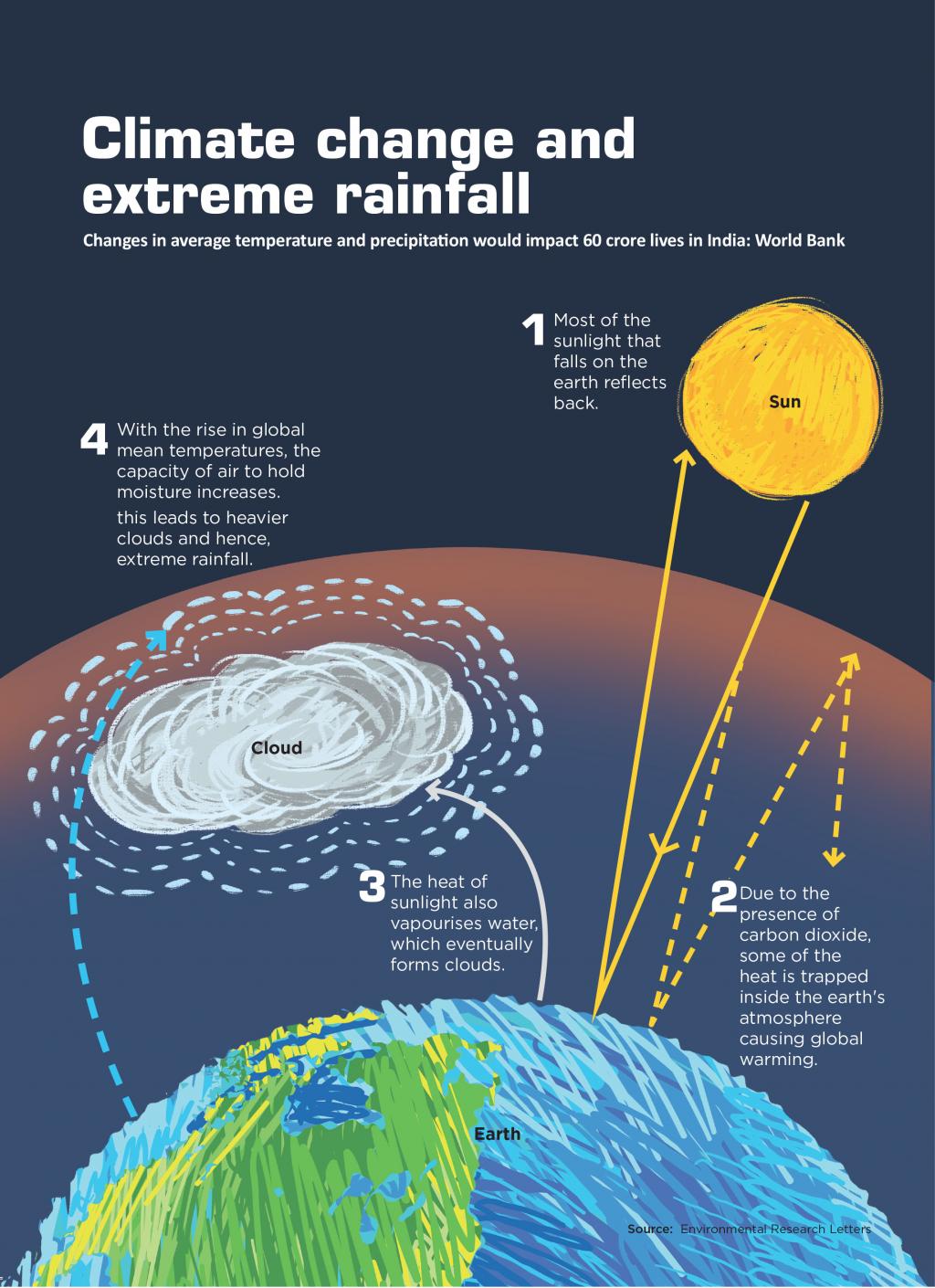
While continuous rain is not occurring everywhere at the same time, the increasing frequency and intensity of extreme rainfall events in many regions is a key indicator of climate change. An isolated rainstorm is normal weather, but a pattern of more severe and frequent heavy downpours points to a changing climate.
The link between extreme rainfall and climate change
- Warmer air holds more moisture: A hotter global climate intensifies the water cycle, causing more water to evaporate from land and oceans. For every
1∘C1 raised to the composed with power cap C1∘𝐶 of warming, the atmosphere can hold about 7% more water vapor, leading to heavier and bigger clouds.
- More intense storms: With more moisture in the atmosphere, when a storm system forms, it can produce more intense and concentrated precipitation. The UN’s Intergovernmental Panel on Climate Change (IPCC) projects that for each
1∘C1 raised to the composed with power cap C1∘𝐶 of global warming, extreme daily precipitation will intensify by about 7%.
- Increased flood risk: While some regions experience more rain, others face longer dry periods. This creates a dangerous cycle where prolonged drought, followed by an intense downpour, can cause severe flooding because the dry, hard ground cannot absorb the water effectively.
Immediate and long-term solutions
The issue of climate change-driven rainfall requires solutions at both the global and local levels.
Global solutions (addressing the root cause)
The most important long-term solution is to address the fundamental cause of the problem: climate change itself.
- Eliminate fossil fuels: This is the most crucial step. Phasing out the burning of coal, oil, and natural gas will curb the greenhouse gas emissions that are warming the planet and intensifying the water cycle.
- Reduce emissions: Beyond energy, reducing emissions from other sources such as agriculture and industrial processes is vital to lowering global temperatures over time.
Local and immediate solutions (adapting to the effects)
While global efforts to mitigate climate change progress, local communities must implement adaptation strategies to minimize the immediate and increasing risk of extreme rainfall and flooding.
- Improve drainage infrastructure:
- “Green” infrastructure: Incorporate nature-based solutions like green roofs, rain gardens, and permeable pavements that absorb rainfall and reduce runoff.
- “Grey” infrastructure: Invest in traditional flood control projects such as levees, seawalls, and expanded storm sewer systems where necessary.
- Enhance early warning systems:
- Issue timely alerts: Develop sophisticated warning systems to notify residents of impending floods and other severe weather events based on weather forecasts and river-flow data.
- Establish emergency protocols: Create clear, publicly communicated emergency protocols for evacuation and safety during a flood.
- Implement resilient urban planning:
- Update building codes: Revise zoning regulations and building codes to restrict new construction in flood-prone areas and ensure that essential infrastructure is on higher ground.
- Restore natural buffers: Restore and protect natural ecosystems, such as wetlands and forests, that act as natural buffers by absorbing excess rainwater.
- Take individual preparedness actions:
- Develop a plan: Create a family communication plan and prepare an emergency kit with essentials like food, water, and flashlights.
- Stay informed: Pay attention to local weather forecasts and official alerts from government agencies.
- Secure property: Move valuables to higher floors, and if evacuating, turn off utilitie
AI generated ans.