Technology can be used in many ways, including for education, communication, and personal use. Here are some tips for using technology properly:
Set goals: Define your technological objectives.
Stay organized: Keep your digital files and information organized.
Manage time: Use technology to help you manage your time.
Automate tasks: Automate repetitive tasks.
Be mindful of your health: Avoid using your phone while driving, turn off notifications, and take time to recharge.
Use social media wisely: Use social media in a responsible way.
Be present: Be present when using technology.
Be familiar with technology: If you have children, be familiar with technology yourself to help them stay safe online.
Technology can also be used in education to help students learn and prepare for the adult world. Here are some ways technology can be used in education:
Create engaging learning experiences-Teachers can use technology like interactive whiteboards and collaborative software to create stimulating learning experiences.
Encourage collaboration-Technology can help students collaborate on projects and develop teamwork skills.
Improve family engagement-Technology can help families connect with schools, which can improve student performance.
Use gamification-Gamification can help students learn in new ways and boost their motivation and engagement.
Gather student feedback-Feedback from students is important for assessing how well the curriculum is working and addressing problems.
There are many ways to be helpful to others, including:
Volunteering: You can volunteer your time at a local organization, such as a shelter or soup kitchen. Volunteering can help you connect with your community and make it a better place.
Donating: You can donate to important causes or donate blood.
Being a good listener: Try to understand where the other person is coming from.
Being kind: Studies show that acts of kindness can improve your well-being and self-esteem.
Being a positive role model: If you treat people kindly, share, volunteer, and help others, your children are likely to want to do those things too.
Connecting with others: Helping others can help you build a positive reputation for yourself amongst a group.
Doing a chore: You can do a chore for someone else.
Sending a thoughtful note: You can send a thoughtful note or care package.
Expressing appreciation: You can say “thank you” and express appreciation.
Promoting good causes: You can promote good causes over social media.
Smiling and spreading positivity: You can smile and spread positivity.
‘When papa makes you pose like a student’: Janhvi Kapoor shares her artwork; experts on easy painting tips for beginners
For kids and even adults who are unable to communicate what they are feeling in words, painting helps sharpen intelligence and articulation.
Painting can be therapeutic and it allows us to pour from a window of our inner landscape. When we do not have the words to express our feelings and emotions, painting acts as a wonderful outlet for expression. Recently, Janhvi Kapoor took to social media to share a glimpse into some artworks she made in her free time. “When papa makes you pose like a student with your paintings so he can forward it to his friend groups and try to hype ur very basic art skills (sic),” she captioned her Instagram post.
For a newbie, trying your hand at a new hobby might seem intimidating. If you too like Janhvi consider your artistic skills “basic” here are some quick and easy tips to help you keep at it and hone your craft without much pressure.
Kaav Ranj, Director at Createit suggested using what you have. “You don’t have to buy expensive or specific paints or paintbrushes. Set up an art station, a dedicated space will keep your habit going and your hobby regular. This could be just a paper and some pencils, or a stack of paper and paint,” he said.
Roshni Bhatia, Art psychotherapist, Bangalore listed out the following suggestions:
Trust the Process: Enjoy painting without striving for perfection. Let your intuition guide you to add colors or shapes simply because it feels right. This is your space to create freely
Find Inspiration Around You: Use everyday objects to express your feelings (e.g., “flowy like water” or “grounded like a rock”). Trace their shapes or let them inspire your art
“If you are unable to spend a significant portion of your day to painting, try to set aside at least ten minutes for practice. Even if you just have ten minutes to practice, it’s still preferable to not practicing at all,” said Himanshi Bathla, self-taught artist. She added that painting is nor about perfection and more about expression. Even if you begin by sketching your favorite food or flowers, make an effort to enjoy yourself.
How does painting as a hobby improve mental health?
He explained that painting as a hobby improves mental health not only because it is sensory but also allows for visual stimulation in the absence of other things. Painting improves organisational ability and clarity of mind. It helps get in tune with your instincts, and improves your visual intelligence. For kids and even adults who are unable to communicate what they are feeling in words, painting helps sharpen intelligence and articulation.
“Historically speaking, patterns have been aesthetic and helpful in improving a good feeling in the mind. Things like mandalas can be helpful in elevating one’s mood and clearing the mind,” he added.
Try filling the whole paper or canvas with paints or a mix of few. Don’t get into making a masterpiece like someone else. It’s your piece, so focus on keeping it an original piece. There is no wrong way when it comes to you and paints on paper. Of course, you can learn various techniques from YouTube, but that’s only when you have found comfort in your exploration with paints,” said Navedita Singh, art therapist.
Friction: The Force that Resists Motion Friction is a force that opposes the relative motion between two surfaces in contact. It arises from the interactions between the molecules of the contacting surfaces. When two surfaces try to slide past each other, these interactions create a resistance to the motion. Types of Friction There are several types of friction, each with its own characteristics:
Static Friction:
Occurs between two surfaces at rest relative to each other.
Prevents the object from starting to move.
Its magnitude increases as the applied force increases, up to a maximum value.
Kinetic Friction:
Occurs between two surfaces in relative motion.
Opposes the motion of the object.
Its magnitude is generally constant and less than the maximum static friction.
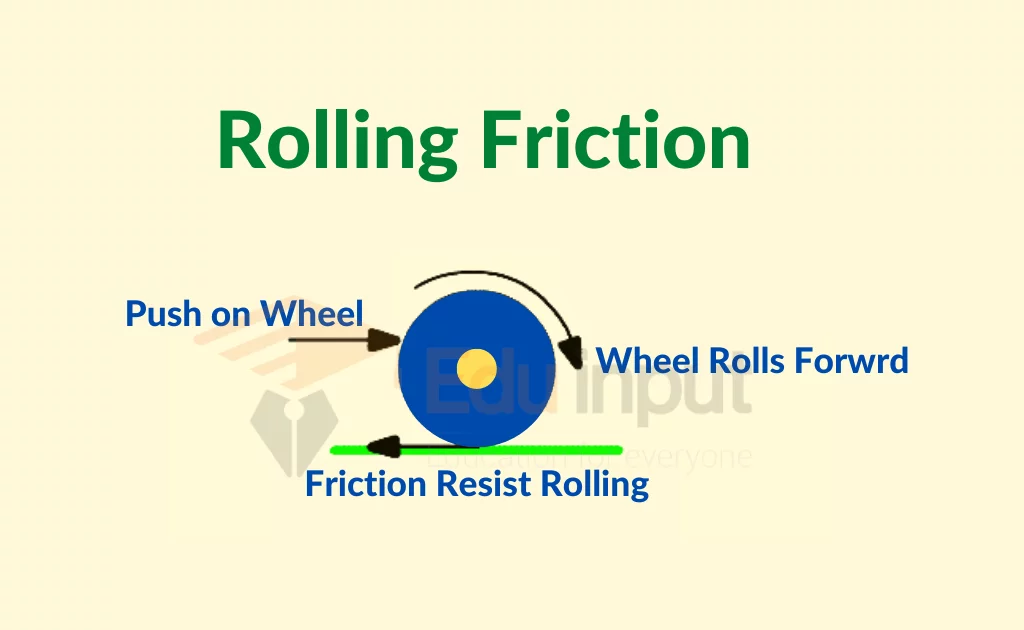
Rolling Friction:
Occurs when a round object rolls over a surface.
Much smaller than sliding friction.
This is why wheels and ball bearings are used to reduce friction.
Fluid Friction:
Occurs between a fluid (liquid or gas) and a solid surface.
Also known as drag or viscous friction.
Its magnitude depends on the velocity of the object and the properties of the fluid. Factors Affecting Friction The magnitude of friction depends on several factors:
Nature of the surfaces: Rougher surfaces generally have higher friction than smoother surfaces.
Normal force: The force perpendicular to the surfaces in contact. Greater normal force leads to greater friction.
Area of contact: In most cases, the area of contact has little effect on friction.
Presence of lubricants: Lubricants reduce friction by creating a thin film between the surfaces. Importance of Friction Friction is both a friend and a foe. It can be beneficial or detrimental depending on the situation:
Benefits:
Enables us to walk, drive, and grip objects.
Allows us to light a match.
Helps in the operation of brakes and clutches.
Drawbacks:
Wears down moving parts in machines.
Generates heat, which can be wasteful.
Increases energy consumption. Reducing Friction To reduce friction, we can:
Use lubricants.
Make surfaces smoother.
Use ball bearings or rollers.
Streamline objects to reduce fluid friction. By understanding friction, we can control it to our advantage and minimize its negative effects.
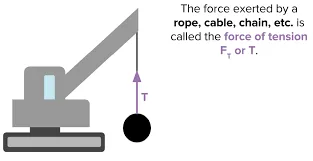
Tension in Physics Tension is a pulling force transmitted axially by a rope, string, chain, or similar object. It’s a force that acts along the length of the object, stretching or pulling it apart. In essence, tension is the opposite of compression. Examples of Tension:
A Hanging Object:
When you hang a weight from a rope, the rope experiences tension. The weight pulls downward, and the rope pulls upward to support it. The tension in the rope is equal to the weight of the object.
Tug-of-War:
In a tug-of-war, both teams pull on the rope with equal force. The rope experiences tension as it’s stretched between the two teams. The tension in the rope is equal to the force exerted by either team.
A Suspended Bridge:
The cables of a suspension bridge experience tension as they support the weight of the bridge and the traffic on it. The tension in the cables is distributed throughout the structure, ensuring its stability.
A Guitar String:
When you pluck a guitar string, it vibrates. The tension in the string is what allows it to vibrate and produce sound. The tighter the string, the higher the pitch of the sound. Key Points to Remember:
Tension is a pulling force, not a pushing force.
Tension acts along the length of an object.
The tension in a rope or string can vary depending on the weight it’s supporting or the forces acting on it.
Tension is a crucial concept in many areas of physics, including mechanics, statics, and dynamics. Visual Representation: By understanding tension, we can analyze and solve various problems involving forces and motion.