Maintaining a robust immune system is crucial for overall health and well-being. Here are some key strategies to boost your immunity:
Prioritize a Nutritious Diet:
Fruits and Vegetables: Load up on colorful produce rich in vitamins, minerals, and antioxidants.
Lean Protein: Include sources like fish, poultry, beans, and lentils for essential amino acids.
Healthy Fats: Opt for unsaturated fats from nuts, seeds, avocados, and olive oil.
Whole Grains: Choose whole grains over refined ones for sustained energy and fiber.
Limit Processed Foods: Reduce intake of sugary drinks, fast food, and excessive processed snacks.
Regular Exercise:
Moderate-Intensity Activities: Aim for at least 150 minutes per week, such as brisk walking, jogging, cycling, or swimming.
Strength Training: Incorporate strength training exercises two to three times a week to build muscle mass.
Quality Sleep:
7-9 Hours: Aim for 7-9 hours of quality sleep per night to allow your body to repair and regenerate.
Consistent Sleep Schedule: Maintain a regular sleep-wake cycle, even on weekends.
Optimize Sleep Environment: Create a dark, quiet, and cool sleeping environment.
Stress Management:
Identify Stressors: Recognize the sources of stress in your life.
Relaxation Techniques: Practice techniques like deep breathing, meditation, yoga, or spending time in nature.
Social Support: Connect with friends, family, or support groups.
Hydration:
Water Intake: Drink plenty of water throughout the day to stay hydrated.
Limit Sugary Drinks: Avoid excessive consumption of sugary beverages.
Healthy Habits:
No Smoking: Avoid smoking and secondhand smoke, as they weaken the immune system.
Limit Alcohol: Moderate alcohol consumption is generally recommended.
Hand Hygiene: Wash your hands frequently with soap and water or use hand sanitizer, especially before eating and after using the restroom.
Supplements (Consult with a Healthcare Professional):
Vitamin C, D, Zinc: These nutrients can support immune function, but consult with a healthcare professional before taking supplements. Remember, building a strong immune system is a gradual process. Focus on incorporating these healthy habits into your lifestyle for long-term benefits.
There are many reasons why people might ignore safety procedures. Some of the most common include:
Lack of awareness: People may not be aware of the safety procedures in place, or they may not understand the importance of following them.
Lack of training: People may not have been properly trained on the safety procedures, or they may have forgotten the training they received.
Lack of enforcement: If safety procedures are not consistently enforced, people may be more likely to ignore them.
Time constraints: People may feel pressured to complete tasks quickly, and they may skip safety procedures to save time.
Complacency: People who have been working in a particular environment for a long time may become complacent and start to take shortcuts.
Perceived inconvenience: People may find safety procedures to be inconvenient or time-consuming, and they may choose to ignore them.
Pressure from others: People may feel pressure from others. The consequences of ignoring safety procedures can be serious, including injuries, illnesses, and even death. It is important to remember that safety procedures are in place for a reason, and they should always be followed.
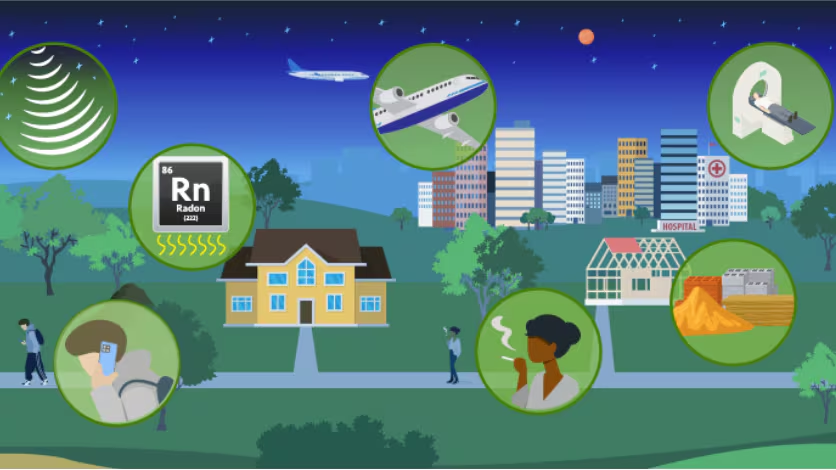
Radiation can have a range of effects on the human body, depending on the type, intensity, and duration of exposure. These effects can be broadly classified into two categories: Acute Effects:
High Doses: Exposure to very high levels of radiation, such as from a nuclear explosion or accident, can cause acute health effects like nausea, vomiting, skin redness, hair loss, acute radiation syndrome, or even death. These effects are often seen within hours or days of exposure.
Long-term Effects:
Low Doses: Exposure to low levels of radiation over a prolonged period can increase the risk of developing certain types of cancer, such as leukemia, thyroid cancer, and breast cancer. These effects may not appear for years or even decades after exposure.
Specific Effects:
Radiation Sickness: This is a collection of symptoms that occur after exposure to high doses of radiation. Symptoms can include nausea, vomiting, fatigue, and hair loss. In severe cases, it can lead to organ failure and death.
Cancer: Radiation can damage DNA, which can lead to the development of cancer. The risk of cancer increases with the amount and type of radiation exposure.
Birth Defects: Pregnant women who are exposed to high doses of radiation may have children with birth defects.
Thyroid Problems: Exposure to radioactive iodine can increase the risk of thyroid cancer, especially in children. It’s important to remember that:
The effects of radiation depend on the type, intensity, and duration of exposure.
Everyone’s sensitivity to radiation is different.
There are steps you can take to reduce your exposure to radiation, such as limiting your time in the sun, wearing protective clothing, and avoiding unnecessary medical X-rays.
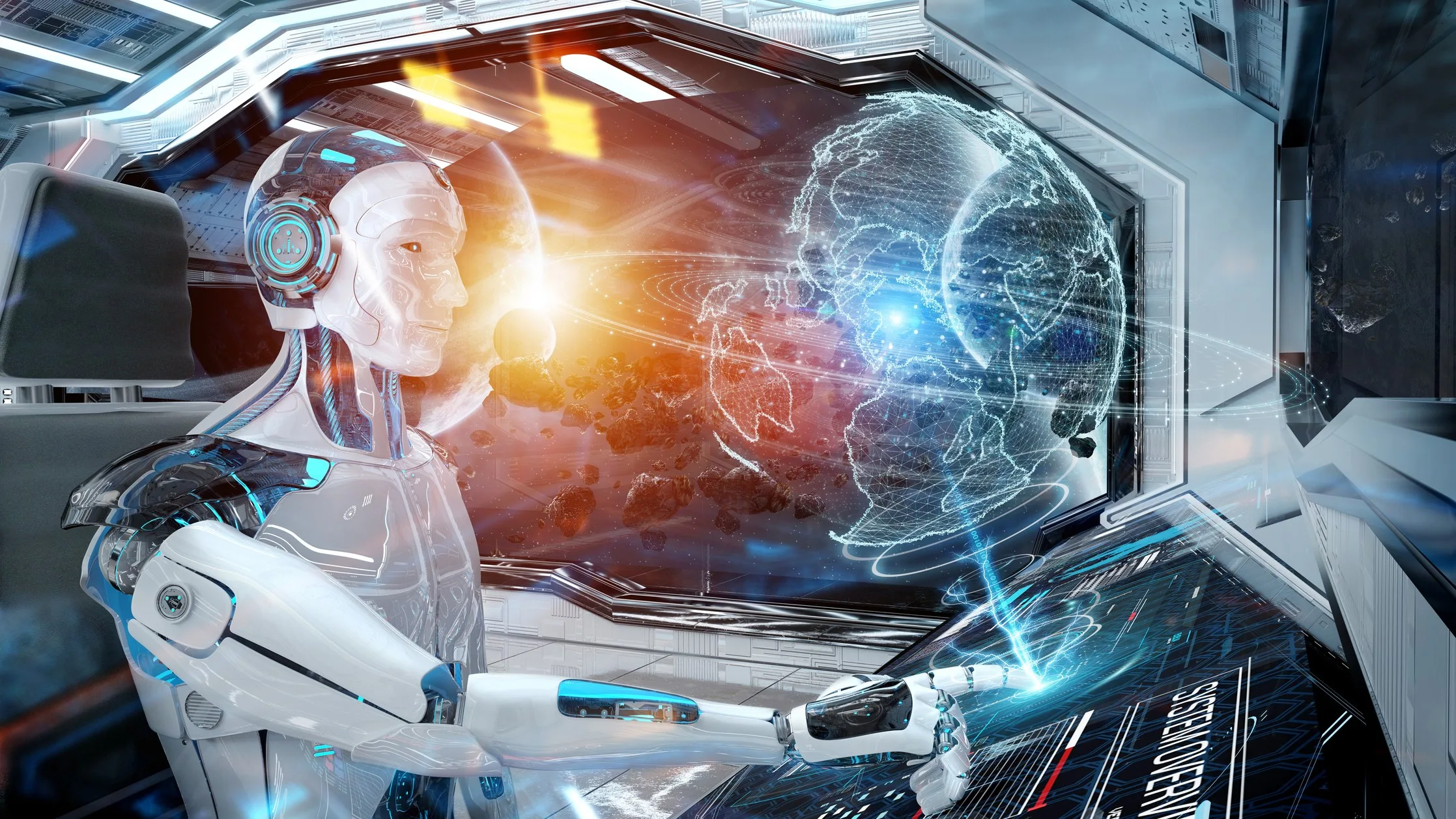
We’ve long assumed that aliens will be like us, but there’s every reason to think they are instead a form of unfathomable AI, says the UK astronomer royal Lord Martin Rees.
It’s taken more than four billion years for intelligent life to emerge by natural selection on Earth, but there are billions more years ahead in our planet’s lifetime. Over that time, intelligence could develop in entirely new directions.
We human beings may be near the end of Darwinian evolution – no longer required to become the fittest to survive – but technological evolution of artificially intelligent minds is only just beginning. It may be only one or two more centuries before humans are overtaken or transcended by inorganic intelligence. If this happens, our species would have been just a brief interlude in Earth’s history before the machines take over.
That raises a profound question about the wider cosmos: are aliens more likely to be flesh and blood like us, or something more artificial? And if they are more like machines, what would they be like and how might we detect them?
Many assume that human beings are the peak of intelligence, but it’s possible that our species may represent a stage on the path towards minds that are more artificial. This could explain why the cosmos seems so empty of life like us. If an evolutionary transition to non-organic intelligence is inevitable across the Universe, our telescopes would be most unlikely to catch human-like intelligence in the sliver of time when it was still embodied in that form. It is perhaps more likely that the aliens would be the remote electronic progeny of other organic creatures that existed long ago.
The prospect of inorganic alien intelligence raises some striking possibilities. If these beings are out there, they would act and think totally differently to us. They may not want to be detected. Indeed, their intentions may be impossible to fathom. To quote Charles Darwin, “A dog might as well speculate on the mind of Isaac Newton.” However, we might deduce a few things.
For one, non-organic intelligence may have no use for an atmosphere, or the planet on which they originated. Interstellar voyages – or even intergalactic voyages – would hold no terrors for near-immortals.
Indeed, they may prefer to live in zero-gravity, because there you can make very large, very lightweight objects. If you wanted to build a huge, elaborate gossamer-thin structure to harvest energy, for example, it’s easier in space than on a planet.
If they have silicon-based brains, they might realise they could expend less energy in colder regions away from planetary systems
It’s also not obvious that they would need to live in orbit around a star. Perhaps they’d have new ways of getting energy that we just can’t envisage yet. If they have silicon-based brains, they might realise that the energy needed for processing “bits” is less at low temperatures, so they would expend less energy in colder regions away from planetary systems. They might even choose to hibernate for billions of years until the cosmic microwave background – the leftover radiation from the Big Bang – is further cooled by the continuing expansion of the Universe.
They may not have the same base desires as us. We have evolved through Darwinian pressures to be an expansionist species. Selection has favoured intelligence but also aggression. But if Darwinian pressures do not apply to these artificial entities, there’s no reason why they should be aggressive. They may just want to think deep thoughts.
The fact we haven’t seen any, and haven’t been invaded by them, doesn’t mean there’s nothing out there. They may simply be more contemplative. We can’t assess whether the “great silence” of the cosmos signifies their absence, or simply their preference.
We can’t assess whether the “great silence” of the cosmos signifies their absence, or simply their preference
We also can’t assume that they’d even be a “civilisation”. On Earth, this term connotes a society of individuals: in contrast, ET might be a single integrated intelligence.
Pessimistically, they could be what philosophers call “zombies”. It’s unknown whether consciousness is special to the wet, organic brains of humans, apes and dogs. Might it be that electronic intelligences, even if their intellects seem superhuman, lack self-awareness or inner life? If so, they would be alive, but unable to contemplate themselves, or the beauty, wonder and mystery of the Universe. A rather bleak prospect.
Alternatively, their more advanced intelligence could well allow them to understand crucial aspects of reality that we cannot, just as a monkey can’t understand quantum theory. There could be complexities to the Universe that neither our intellect nor our senses can grasp, but electronic brains may have a quite different perception.
Implications for searching
If alien intelligence is more likely to be non-organic, what would this mean for the Search for Extraterrestrial Intelligence (Seti)?
In a decade or two, there’s a realistic prospect that we’ll have the capability to detect biosignatures on other planets – atmospheric chemistry or vegetation, for example. But to detect artificial life, we would need to look for “technosignatures”, such as electromagnetic transmissions.
The focus of Seti has been on the radio part of the spectrum. But of course, in our state of ignorance about what might be out there, we should explore all wavebands: the optical and X-ray band. Even if messages were being transmitted, we may not recognise them as artificial because we may not know how to decode them. Consider the difficulty a veteran radio engineer familiar only with the amplitude-modulation of the 20th Century might have decoding modern wireless communication.
Finding non-organic intelligence also means being alert to evidence of non-natural phenomena or activity – even within our own Solar System. It was right that the Green Bank telescope stayed pointed at Oumuamua, the anomalous object that passed through our neighbourhood recently and is believed to have originated from outside our Solar System. It’s also worth keeping an eye open for especially shiny or oddly-shaped objects lurking among the asteroids. We may also need to seek evidence for non-natural construction projects, such as a “Dyson Sphere”, a giant, hypothetical energy-harvesting structure built around a star.
In sum, astronomers like me should expect surprises. We ought to be open-minded and make sure that we wouldn’t miss anything odd.
Perhaps whatever is out there doesn’t evolve by Darwinian selection: it would be what I call “secular intelligent design” that’s a bit like machines designing better machines. And while it may not be broadcasting its existence to us, it could be found throughout the Universe.
*This article is as told to Richard Fisher. Lord Martin Rees is the UK’s Astronomer Royal, and is based at the University of Cambridge.
Diagrams are often easier to understand than text for a few key reasons:
Visual Processing: Our brains are wired to process visual information very quickly. Diagrams present information in a way that leverages our natural ability to recognize patterns and relationships.
Conciseness: Diagrams can often convey complex information in a much more compact and efficient way than text. They can highlight key connections and relationships that might be buried in a lengthy description.
Memory: Visual information tends to be more memorable than text. When we see a diagram, we’re not just processing words, we’re creating a mental image that can be more easily recalled later.
Universality: Diagrams often transcend language barriers. Even if you don’t understand the accompanying text, a well-designed diagram can still communicate the essential message. Here are some specific examples of how diagrams can be helpful:
Flowcharts: Show the sequence of steps in a process, making it easy to understand the overall flow and identify potential bottlenecks.
Organizational Charts: Visually represent the structure of a company or team, making it clear who reports to whom and how different departments interact.
Mind Maps: Help organize ideas and brainstorm by visually connecting related concepts.
Data Visualization: Charts and graphs make it easy to understand trends, patterns, and relationships in data that would be difficult to grasp from raw numbers alone. While diagrams are powerful tools, it’s important to remember that they are not always the best way to present information. Sometimes, a well-written explanation or a detailed description is necessary to fully convey the nuances of a particular topic.